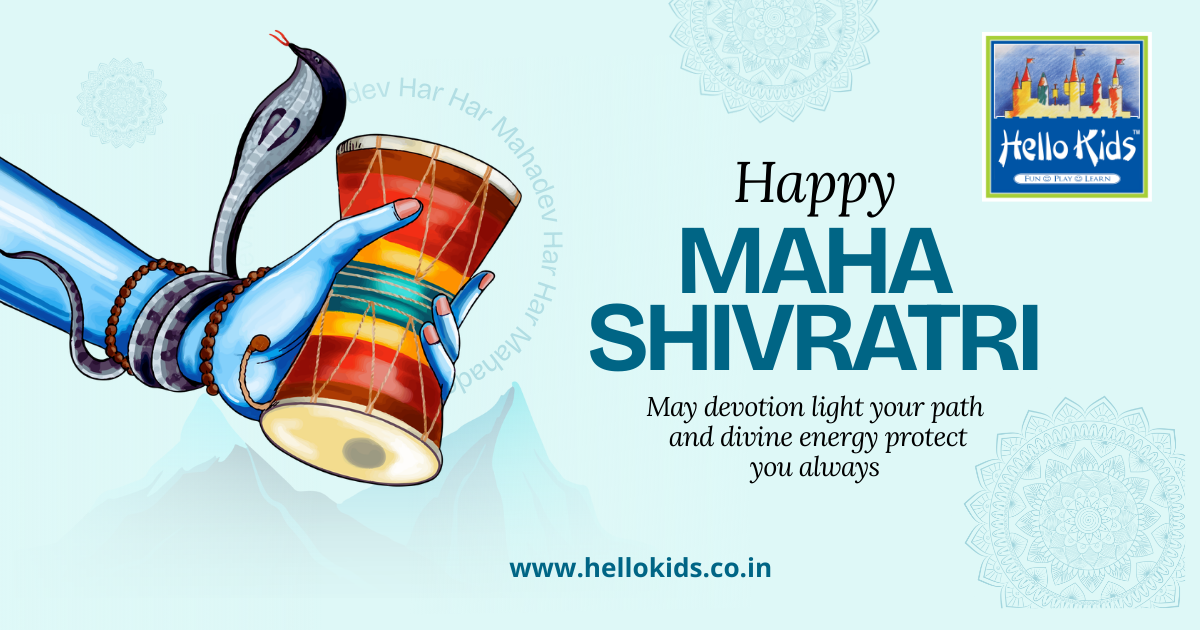
Festival-Based Learning: How Maha Shivratri Enhances Early Childhood Education
Early childhood education thrives when learning is joyful, meaningful, and rooted in real-life experiences. One of the most powerful yet often underutilized teaching tools in early years classrooms is festival-based learning. Festivals bring together stories, traditions, art, music, food, rituals, and community participation—offering a rich, multi-sensory educational experience.
Among the many cultural celebrations observed in India, Maha Shivratri stands out as a beautiful opportunity to introduce young children to values, creativity, mindfulness, and cultural awareness in an age-appropriate way. When thoughtfully integrated into early childhood education, this festival becomes more than a celebration—it becomes a holistic learning experience.
Understanding Maha Shivratri in a Child-Friendly Way
Maha Shivratri, which means “The Great Night of Shiva,” is dedicated to Shiva, one of the principal deities in Hindu tradition. Rather than focusing on complex mythology, educators can present the festival to children through simple themes:
Kindness and compassion
Calmness and mindfulness
The importance of nature
Family traditions
Light over darkness
For young learners, stories about Shiva can be simplified into engaging narratives that emphasize positive values—such as helping others, staying peaceful, and respecting all living beings.
By framing the festival around universal values, educators ensure inclusivity while still honoring cultural authenticity.
Why Festival-Based Learning Works in Early Childhood
Children between ages 2–6 learn best through:
Sensory exploration
Play-based activities
Repetition and rhythm
Social interaction
Storytelling
Festivals naturally combine all these elements.
Maha Shivratri involves music (bhajans), art (rangoli and decorations), symbolic objects (like the Shiva lingam), food offerings, and community gatherings. Each of these can be adapted into age-appropriate classroom activities that support cognitive, social, emotional, and physical development.
Let’s explore how.
1. Storytelling Builds Language and Listening Skills
Stories associated with Shiva—such as tales of courage, kindness, and wisdom—offer excellent opportunities for language development.
Teachers can:
Use puppets to narrate simple Shiva stories
Encourage children to retell the story in their own words
Introduce new vocabulary like “meditation,” “mountain,” and “river”
Conduct circle-time discussions about what they learned
Story-based learning improves:
Vocabulary expansion
Listening comprehension
Sequencing skills
Imagination
When children actively participate in storytelling, they also build confidence in public speaking and expressive language.
2. Art and Craft Activities Enhance Creativity and Fine Motor Skills
Maha Shivratri-inspired art activities are excellent for fine motor development and creative expression.
Some classroom ideas include:
Making paper tridents (trishuls)
Clay modeling of symbolic shapes
Finger painting night-sky scenes
Creating simple rangoli patterns using colored rice
Decorating cut-out shapes of leaves (like the sacred bilva leaf)
These activities strengthen:
Hand-eye coordination
Grip control
Pattern recognition
Color awareness
Art also gives children a safe space to express emotions and ideas, making learning joyful and personal.
3. Introducing Mindfulness Through Simple Meditation
One of the most beautiful aspects of Shiva is his association with meditation and calmness. Early childhood classrooms can gently introduce mindfulness practices inspired by this theme.
Teachers might:
Guide children through one-minute quiet breathing
Practice “listening to silence” games
Encourage slow, mindful movements
Teach calming chants in soft rhythm
These exercises help children:
Regulate emotions
Improve focus
Develop self-awareness
Reduce anxiety
In today’s fast-paced world, introducing mindfulness early can significantly support emotional development.
4. Exploring Nature and Environmental Awareness
Shiva is often associated with mountains, rivers, animals, and forests. This creates a perfect gateway for nature-based learning.
Educators can:
Discuss the importance of rivers and trees
Take children on a nature walk
Encourage leaf collection and observation
Talk about caring for animals
Such discussions promote:
Environmental responsibility
Observation skills
Curiosity about the natural world
When children connect festivals to nature, they begin to understand that culture and environment are deeply interconnected.
5. Sensory Learning Through Music and Movement
Music plays a significant role during Maha Shivratri celebrations. Bhajans and rhythmic chanting can be adapted for children in simple, engaging formats.
Teachers can:
Play soft devotional music during art time
Encourage rhythmic clapping
Introduce simple dance movements
Use instruments like tambourines or bells
Music enhances:
Auditory discrimination
Rhythm recognition
Gross motor coordination
Emotional expression
Movement-based activities are especially important in early childhood classrooms, where children learn best when physically engaged.
6. Cultural Awareness and Inclusivity
Introducing festivals in early education builds cultural awareness and mutual respect. When children learn about different celebrations, they develop empathy and appreciation for diversity.
During Maha Shivratri, teachers can:
Invite families to share how they celebrate
Display cultural symbols respectfully
Compare similarities between different festivals
Discuss how families come together during celebrations
This fosters:
Social understanding
Respect for traditions
A sense of belonging
Community connection
Festival-based learning helps children see that diversity is something to celebrate.
Conclusion
Maha Shivratri offers far more than a cultural observance—it presents a powerful educational opportunity. By thoughtfully integrating storytelling, art, mindfulness, music, nature exploration, and collaborative activities, educators can transform this festival into a dynamic learning experience.
Festival-based learning brings warmth and meaning into early childhood education. It bridges home and school, culture and curriculum, celebration and cognition.
When children celebrate, they don’t just learn about a festival—they learn about kindness, calmness, creativity, and community.
Hello Kids – India’s Most Trusted Preschool brand. With 1050+ branches across the country, Hello Kids is shaping the future of young learners by making quality early education affordable and accessible. Hello Kids has become the first choice for parents in top cities like Bangalore, Hyderabad, Pune, Gujarat, Punjab, Chennai, Kolkata, Delhi, and Mumbai.
We follow the National Education Policy (NEP) 2020, which emphasizes a play-based, activity-driven curriculum that fosters cognitive, social, emotional, and physical development in a safe, joyful environment.
Activities for social, emotional & cognitive growth
No-royalty franchise model
At Hello Kids, children learn with confidence, curiosity, and joy.
Admissions Open – Enroll Your Child Today
Parents across India choose Hello Kids for world-class preschool education that is fun, meaningful, and affordable. Visit your nearest branch and give your child the bright start they deserve.
Dream of running a preschool? With Hello Kids’ no-royalty model, low investment, and complete support in training, marketing, and operations, you can build a profitable preschool business in your city.